
Building 101
Blackjack, Loss Aversion, and Why Most People Quit Too Soon

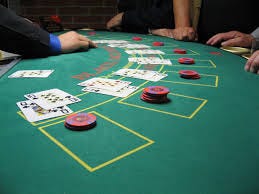
Black Jack and the Reason why there is a Table Limit:
If I offer you one $5 hand of blackjack, you may or may not play.
You understand the house has a small edge. The outcome is uncertain. You could win. You could lose. For many people, the rational response is hesitation.
Now change the structure.
You are at a no-limit table. You are allowed to double your bet after every loss. There is no cap. You have sufficient capital. When you eventually win a hand, you recover every prior loss and net $5. Then you reset and begin again.
The probability of any single hand has not changed.
Yet almost everyone now says, “Of course I would play.”
Why?
Because the game has shifted from a single trial to a sequence. The math of one hand is uncertain. The math of repeated attempts, with adequate capital, begins to feel inevitable.
That framing shift is exactly what Daniel Kahneman describes in his work on loss aversion. Humans overweight the pain of a single loss and underweight the cumulative effect of repeated gains. When risk is framed as one exposure, we hesitate. When risk is framed as a durable system, we lean in.
Now let’s talk about building homes or any investment for that matter:
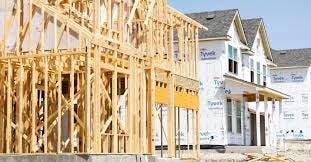
We see three types of builders.
First, the one-home builder. He comes to market with enough capital to build one house. If it sells well, he feels brilliant. If it stalls or produces a modest loss, the anxiety is real. For him, this is a single hand of blackjack. It’s emotionally heavy. It’s personal. The result feels like a verdict on competence. This one goes on to the next step by step if they feel ok.
Second, the hesitant builder. He has enough capital for one house, maybe two, but he knows he cannot absorb meaningful variance. Because of that constraint, he often never starts. The fear of being the one who closes at a loss keeps him on the sidelines entirely.
And then there is the third builder.
This builder understands something different.
He understands that building is not a single hand. It is a portfolio of attempts. He understands that over time, outcomes distribute. Some homes will be singles. Some will be doubles. Occasionally there will be a home run. And yes, once in a while, there will be a loss. He may even do 2, 3, or 5 at a time.
Because they fundamentally know the market, across repeated disciplined execution, tends to reward competence.
Across 22 homes so far we have helped bring to life with our broader team, only one closed at a loss for the developer. One.
That same developer had completed another project with us. On the first, he generated a 41% nominal return on capital in less than two years — a gain of $1,239,000. On the second, he lost $148,000.
Objectively, across the two projects, he was still far ahead.
Emotionally, the loss carried more weight than the gain. He disengaged. Precisely at the wrong moment.
That is loss aversion in its purest form.
Kahneman showed that losses hurt roughly twice as much as equivalent gains feel good. So even when the aggregate math is favorable, the psychological imprint of a loss can cause someone to stop playing the game altogether.
And that is where most builders miss the larger point.
If all you can do is one house, then yes — the outcome matters enormously. You might do very well. You might experience a modest loss. One attempt is variance. It is not destiny. DETOUR —>. Know who you are and know who you are doing business with.
But for those with sufficient capital, the structure changes.
If you can build repeatedly, prudently, without over-leveraging to “goose” returns, the numbers begin to tell a different story. Over time, across a portfolio of builds, we have produced an average annual cash-on-cash return of approximately 24.6% — without financial engineering, without excessive leverage, without chasing artificial boosts to annualized figures.
That return does not come from one extraordinary project. It comes from the distribution and proper analysis of risk of loss and value of gain unemotionally. But with the ability to stand at the plate throwing off tough pitches with foul balls until you make contact.
It comes from continuing to play.
The blackjack table analogy matters here — not because we are doubling recklessly, but because we are recognizing that probability stabilizes over repetition. The house edge in blackjack diminishes for the skilled player over many hands. The anxiety of any one hand fades in the context of hundreds.
Building is similar. A single home can feel like a referendum. A disciplined portfolio becomes a business.
The real risk is not the occasional loss.
The real risk is stopping after one.
If you experience a modest setback and allow loss aversion to remove you from a structurally sound opportunity set, you never reach the average. You never experience the singles, the doubles, or the occasional home run. You freeze at the one hand that didn’t go your way.
For builders with limited capital, prudence is necessary. One project may be appropriate. Two may be too many. Risk must match capacity.
But for those with the balance sheet to sustain repetition, the strategy is clear: build, offer back to the market, evaluate, and build again.
Not blindly. Not emotionally. Not ego-driven.
Systematically.
Because over time, markets reward disciplined repetition far more than they reward perfect timing.
One hand of blackjack is anxiety.
A hundred hands, properly capitalized, is probability.
Building is no different.
And now you know why there are table limits at BlackJack tables.