

Rehearse and Play
Eight days before Brenda died, she was still with me.
Still talking. Still thinking. Still deciding.
She insisted that I go play the guitar at Dawn’s daughter’s wedding. I had promised months earlier, and for those months the piece had kept me focused — a waltz by Agustín Barrios Mangoré. William was going with me. We had practiced. I had prepared. In a season where everything else was collapsing inward, that music gave me something structured and disciplined to hold onto.
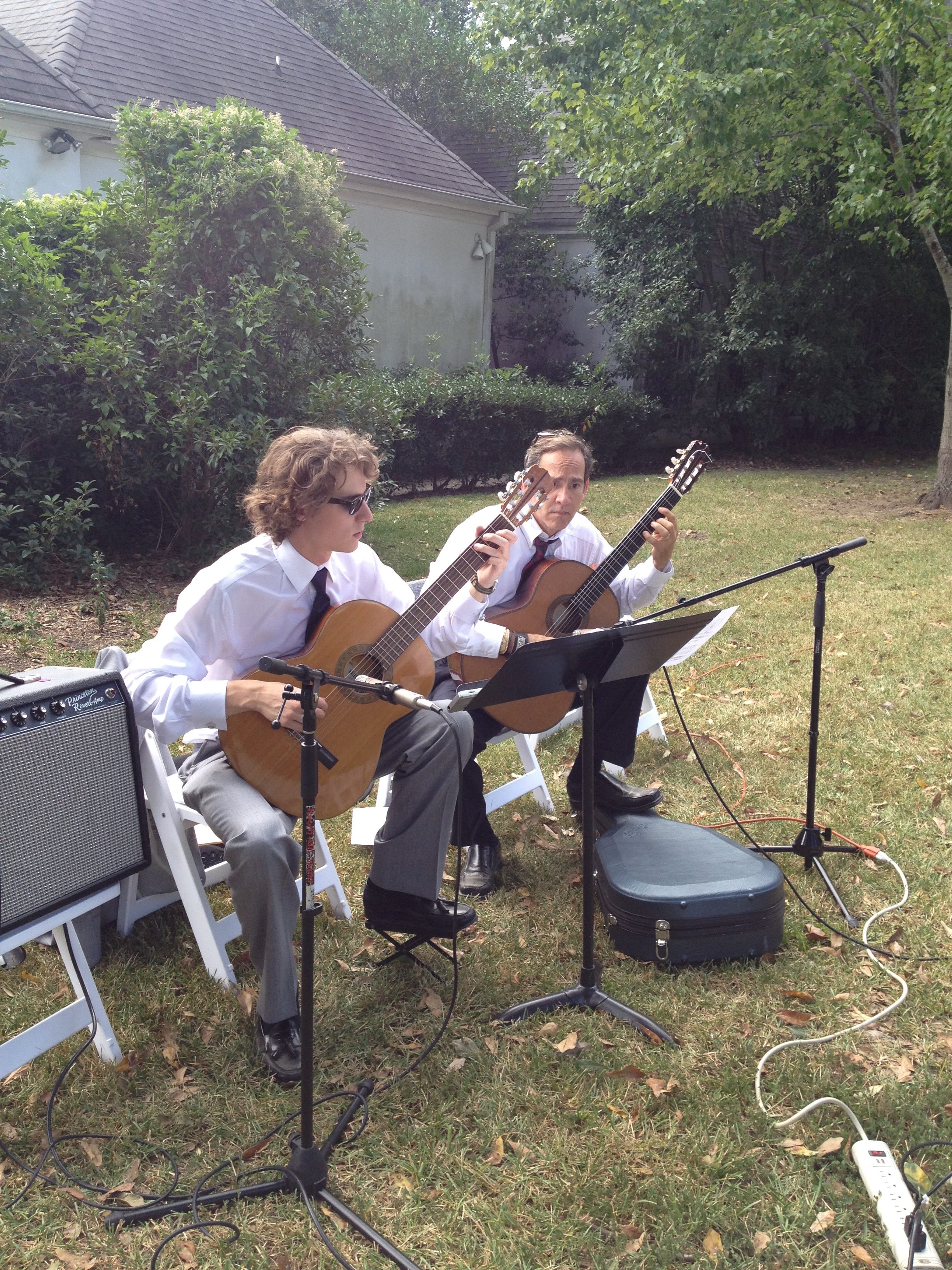
The wedding was in the Jackson, Mississippi area. We both knew she was dying. I worried she would slip away while I was gone. She looked at me with that calm clarity she had carried through so much of this and said she would not die while I was away. I believe she knew she could promise me the drive down, the wedding the next day, and the return that evening.
I kissed her goodbye not knowing that while she would keep her promise about dying, she might not keep her place here.
By the time I returned, something had shifted. She had gone into a deep state of rest. The woman who had been fully present when I left was no longer fully here when I came back. It was subtle and irreversible at the same time. Who she had been in this world had already begun to withdraw.
I was not going to stop.
Confirmed By Faith
Brenda wanted to be confirmed as an Episcopalian, my particular doctrine at the time. She made it in my book. Still, I enlisted an Episcopal rector to come to the hospice room and administer the liturgies.
Lying there, diminished in body but not yet erased, she mouthed the words to her own rite of passage. I watched her form them. I watched her claim them. It was quiet and it was deliberate. And we sang Amazing Grace. I still had then a pretty strong faith.
But behind the liturgy were the clinical agreements we had made when she was still strong enough to look me in the eye and trust that I would recognize the moment.
Early on, we had decided that when suffering outweighed recovery and the body was clearly shutting down, ketamine would be our transition plan. Clinically, it creates dissociation — a separation between mind and body. She would still be there, but she would not be tethered to the full awareness of why she was there. She would not be fully engaged with the pain or the mechanics of dying. It was, at that time, as close as we could come within the law to easing her passage when the need was unmistakable. These are difficult decisions to make it seems, but when love is clear, choices become easy. Would anyone wish to try to save the life of a now 78 pound wife? She was so tired and I think so ready.
I had authorized fluids. I had also signed an order not to correct her supraventricular tachycardia if it returned. We had fought that battle before. I had watched her be cardioverted several times. But as the end approached, I rescinded that order. I knew myself well enough to know that I could not sit idly by for hours if her heart began racing uncontrollably again. Thankfully, it did not. We managed her rhythm with blockers. The larger problem became simpler and more final: she no longer had the ability to eat or drink in any meaningful way.
When we administered the ketamine, it took about a day before she said quietly, “Where am I? And why do I feel this way?” Those were the last lucid words. After that, there was only presence without narrative.
Three days before she died, I removed the fluids. They were creating pressure, swelling, and distress without benefit. The body was conserving what it could. Her extremities grew cold as circulation prioritized the vital organs. Her abdomen remained warm. Her breathing changed — the uneven rhythm anyone who has witnessed death recognizes but never forgets.
For nearly a day, that final transition unfolded. It was not dramatic. It was not cinematic. It was biology completing its arc.
At 12:05 a.m. on October 5, 2014, after almost five years of living with cancer, Brenda died.
I watched it.
The Only Home We’ve Ever Known
I had been present when my grandfather died. I was there when my father died. I would later be there when my mother died. But no one had ever taught me it was okay to die until that night.
She did.
Not through words. Through the way she allowed it. Through the absence of fear in her body. Through the quiet surrender of someone who had finished what she came to do.
There is something profoundly different about the husband and wife relationship at the end. You have shared decades of ordinary mornings, arguments, laughter, plans, and disappointments. You have built a private language no one else fully understands. And then, in the last hours, you become the final witness to each other’s existence in this world.
I became this day for some reason centered on the profound nature of our existence and am reminded of it often.
Brenda Jabbour Lived there on that Pixel for a time and with me for a joyous 19 years. I was honored to help her move away from the Pale Blue Dot.
Andy was gone. Somewhere.
It is there, in that room, that the words we say so easily at a wedding reveal their full weight.
In sickness and in health, till death us do part.