

Hope, once it stops being elusive, does something unexpected.
It quiets down.
It stops demanding belief and starts asking for participation. Not grand plans. Not declarations. Just presence. Just movement. Just living where you are while you can.
After the scans came back clean — clean enough, anyway — life didn’t explode into joy. It settled. And that settling is what saved us. This is the Caregiver’s Journey, but this was still training. Training to be in the moment. Training for the day you’re called off the bench and into the game.
For now, it was simply life.
We didn’t talk about beating anything. We talked about logistics. Schedules. Where we needed to be and when. And slowly, almost without naming it, we began making choices that pointed us forward.
Not dramatic ones. Practical ones.
And the first of those choices came out of something that had nothing to do with cancer — and everything to do with family.
The First Forward Move
By late 2010, something important had happened in our house.
My son had healed.
Not perfectly. Not magically. But in the only way that matters — he was back in school, back on track, and moving toward graduation with his class at Houston High School. Watching that happen while everything else felt uncertain was grounding in a way I didn’t fully appreciate at the time. I can still see us at our Bentwood Creek home, working through eleventh‑grade material together, getting him ready to re‑enter twelfth grade at the end of the first nine weeks. He was proud of the work he did. So were we.
Here’s the part people don’t expect: Brenda was a huge part of that.
In the middle of her own fight, she steadied the family. She helped hold the center while he found his footing again. She helped me make the tough choices that still had to be made during that tricky stretch of growing up. There was no martyrdom in it. Just quiet, relentless support. She understood something instinctively — that getting him launched mattered. That forward motion in one place helped everyone else breathe.
What she knew before she died was simple: he nailed it in college. His grades improved. His focus sharpened. She knew, before she was gone, that he was going to be alright.
When he graduated, something shifted for me.
The kid was grown. College was next. His life was moving forward and outward.
And I remember thinking, very plainly: We don’t need to stay put anymore.
So we didn’t.
We had only been to Perdido Key once together, back in 1998. Turner even came with us. That was it. No long history. No childhood memories. But in July of 2011 — a month and a few days after his graduation — we came to 30A and landed at Coastal Dunes, having gone under contract the first week of June and closed just before the Fourth of July.
We didn’t call it a dream. We didn’t call it an escape.
We called it buying time. We didn’t know how much. But we knew we had some.
And that decision — to live somewhere that made daily life feel lighter — came before any rhythm, before any triangle.
It came first.
Memphis: Reality Checks
Memphis was medicine and truth. Dr. Weeks. Treatment days. Labs. Long afternoons that required patience. A few days afterward to recover, to rest, to let the chemicals do what they were designed to do. By then it was Avastin, not other significant chemotherapy. Her hair was coming back.
It wasn’t romantic. It was necessary. And candidly, it wasn’t hard — at least not yet — as an early “caregiver”. It was being there. Driving. Cooking some meals. Sitting and talking, or watching television. That would change one day.
But Memphis was also something else that year: healing.
We all began to gather our lives there, even as we started saying our goodbyes to the city. My son eventually left in 2020 for Denver and his new life there with Katherine. I left in 2011, domiciling with Brenda in Florida while retaining our home in Memphis. And Brenda, in her own way, prepared me to leave forever in 2014.
Nashville: Verification
Nashville was reassurance.
Vanderbilt. Dr. Horn. Second looks. Confirmations. Quiet agreement. Ideas. Possible alternate paths. We looked there for cures while remaining grounded in the understanding that they were probably not out there somewhere — but that vigilance mattered. PET scans followed. Negative after negative.
We weren’t chasing miracle opinions. We weren’t shopping for hope. We were double‑checking reality.
Those visits were short — a day, maybe two — but they anchored us. They told us we weren’t missing something obvious. That we weren’t fooling ourselves.
Then we moved on.
The Triangle Takes Shape
Once Florida was in place, life organized itself around it.
Almost naturally.
Memphis. Nashville. Florida.
That triangle became our life.
Florida was where we remembered how to breathe.
And something clicked.
We didn’t say, This is forever.
We said, This is now.
We knew we had bought time.
We just didn’t know how much. So we used it.
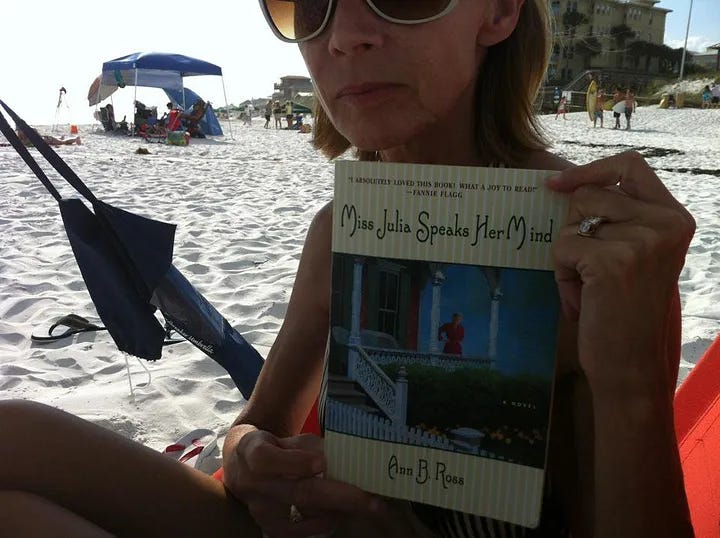
Two weeks in Florida. White sand. A few good books. Quiet mornings. Afternoons that didn’t need explaining. Evenings that felt earned.
Rudi. Missy. Me and Brenda.
Friends appeared — not loudly, not dramatically — but in the way the right people often do. Kind. Steady. Still here today.
Susan, especially. A rock, whether she knows it or not. Without her, I’m not sure how October 7th would have unfolded years later, when I had to say goodbye to Brenda’s earthly remains. People show up in ways you only understand in hindsight.
Let them.
Maintenance Mode
By then we were into maintenance therapy — Avastin and PET scans every six months. It wasn’t carefree, but it was livable. And that distinction matters.
Life became a loop:
Two weeks in Florida
A week or two in Memphis
A day or two in Nashville
And, every now and then, a line out and back
Belize. Anguilla. Again and again.
Not escapes. Just reminders of once we thought would be our forever carefree. We knew better than forever now.
I was still working some. Traveling when I needed to. We were functioning — not pretending, not denying — just living with eyes open.
Hope gave way to something sturdier.
Optimism, yes — but informed. Clear‑eyed. Rooted in the understanding that we no longer counted days. We simply used them. Caregiving would come. Caring — and being quietly molded into the person I would need to be later — was already happening, though I didn’t fully recognize it at the time.
I was changing into the person I should have been all along. Kinder. More aware. More present. Indeed to a meaningful extent carefree of barriers of thought and worry of others thoughts of me. I no longer thought of myself — or us — as different from anyone else. We weren’t, and never had been. I began to see people still in the race differently. I drifted away from artificial stratification and found myself drawn back to regular people — the kind I should never have stopped being. If I offended you it was no longer of malice of forethought. It was of being me and the me I was becoming was and is OK.
I would need that later.
The Question I Didn’t Ask Yet
Looking back now, I wonder if she knew more than she said.
If this triangle wasn’t just about treatment and rest — but about preparing me.
Depositing me, slowly and deliberately, into a life I would eventually have to live without her. Sending me on my way. Telling me, in her own quiet way, to be on my way.
At the time, everything felt fine. Good, even.
We bought a lot on Wood Beach Drive in May of 2013. We started building a house together by about June. She was still herself. We were still moving inside the triangle. She was sending me on my way into the life I would continue to create. As who I am and as honor to what I was given. You cannot choose what you are grateful for. You must embrace it all - Colbert
But triangles don’t last forever.
And what came next would ask more of us than movement ever had.
For now, though, we lived. Now what?
And living — real living — has a rhythm.
Even when you don’t know how long the song will play.

Rhythm and melody.
If I had my time again
I would do it all the same
And not change a single thing
Even when I was to blame
For the heartache and the pain
That I caused throughout my years
How I’d love to be your man
Through the laughter and the tears
Situation no win
Rush for a change of atmosphere
I can’t go on so I give in
Gotta get myself right outta here
Now I’m fully grown
And I know where it’s at
Somehow I stayed thin
While the other guys got fat
All the chances that I’ve blown
And the times that I’ve been down
I didn’t get too high
Kept my feet on the ground
Situation no win
Rush for a change of atmosphere
I can’t go on so I give in
Gotta get myself right outta here
Yes, yes, delightful, delightful
Rush for a change of atmosphere
Mmm, I wish I could sing like that.
Not everything’s singing, you know
The only important thing these days is rhythm and melody,
rhythm and melody
And of all my friends
You’ve been the best to me
Soon will be the day
When I repay you handsomely
Broken hearts are hard to mend
I know, I’ve had my share
But life just carries on
Even when I’m not there
Situation no win
Rush for a change of atmosphere
I can’t go on so I give in
Gotta get myself right outta here
Situation no win
Rush for a change of atmosphere
I can’t go on so I give in
Gotta get myself right outta here
Gotta get myself right
Gotta get myself right
Gotta get myself right outta here
Gotta get myself right
Gotta get myself right
Gotta get myself right outta here