

So once we had settled into a routine and the house in Florida was finished, we decided to sell our home in Collierville. By that point, we had already done so and were renting a small apartment near Schilling Farms, where my son had gone to school.
We arrived on August 10, 2014, ready to see the doctors and find out exactly what we were dealing with. What was next? What would we do? We had stayed overnight with the dogs in Birmingham and then drove on to our “home away from home.”
Friends wanted to see us, but we needed some time. Kitty Lou would soon become the central player in our lives yet again. She was a friend of Brenda’s from her days working in geriatrics with Dr. Morgan. They had known each other longer than I had known either of them, of course. She would ultimately become the lynchpin I needed to keep things moving forward.
After seeing Dr. Weeks, we decided we needed new imaging, and we got it done quickly. We already knew what it was going to show—nothing particularly pretty.
We now had what appeared to be a somewhat free-floating growth. Let me pause here to share something that might buy someone more time, or at least more quality. Cancer is essentially “cured” if it does not change—and the key word there is ever. We had that for a time.
I also learned, as a layman and not with scientific certainty, that containment matters. Containment within something is better than not. Configuration, containment, and position are everything.
Brenda was “lucky” in that she remained relatively healthy through much of her ordeal because the configurations were good. Remember the initial bilateral lung masses on the extreme outer edges of her lungs? That was both good containment and favorable configuration. Had those masses been central—near the main bronchi—we would not be writing this story.
Containment led to good outcomes. A small, possibly cancerous nodule in a spinal vertebra was well contained and treated with radiation. The configuration there was also favorable, because the radiation method was advanced and did not damage surrounding soft tissue. That was a later lesson—one we didn’t fully understand at the time.
For a long while, configuration and containment stayed on her side. Until we lost one thing.
The configuration of the adrenal gland mass was acceptable. The position was acceptable. Containment was originally acceptable. Our choice—one that may not have changed the final outcome—was probably not the best. Surgery, in her case, would have been the better option. She would be seventy-five today if she were alive. Would she have been alive? My guess is no.
But we lost containment on August 11, 2014. We had actually lost it earlier, back in February during surgery, and the visualization had been clear then.
Without containment, we now had a freely growing mass.
After the initial imaging, we decided that chemotherapy again might be a reasonable course of action. I mean, what was the harm of another round? What would have changed if she hadn’t had chemo?
The reality was clear to both of us—and I think it was already clear to her. In retrospect, shortly after she died and certainly now, it’s obvious she had already begun the dying process. She became very selective about who she would see. She was quieter, more reserved. I was really the only person she allowed inside her bubble anymore. She had the conversations she needed to have—with her son and with her sister.
She was dying, and she knew it.
Still, there were rational decisions she could make, and this one seemed rational at the time.
We started—round one—very quickly. Not exactly a mistake, but in retrospect, and for both of us, it was a clear error of anatomy without the data.
About two weeks after the first treatment, she had a severe pain reaction. We didn’t know what it was. She was not doing well, and we got in very quickly with Dr. Weeks for evaluation.
The nurses immediately accessed her port and administered pain medication. We stepped aside, and one of them said to me, “Something has changed. We don’t know what yet, but this is serious. You can’t really take her home. We need to find her a hospital bed.”
And there it was.
Baptist Memorial Hospital. Check-in: August 21, 2014.
What then?
We were still connected, and the doctors ordered extensive imaging—and we got it fast. By Monday, we more or less learned the news. Had we known, maybe we would have slow-rolled the process. Instead, we unknowingly sped things up by who knows what—days, weeks, maybe a month or two.
The 3D imaging revealed the bus in all its glory. The tumor had begun growing upward along the aorta, and the chemotherapy had weakened the support the tumor itself had been providing as it partially invaded the structure. The chemo likely caused part of the tumor to die back in a way that, paradoxically, hastened an unstable and unhealthy situation.
Then came the offer.
They could operate and remove much of it. It would be a fully open procedure. Chemotherapy would have to stop—it wasn’t going to work, in their view. And suddenly my fragile wife and I were left alone with our rational minds.
She had started as a 110-pound woman—small by every measure. That was a healthy weight for her five-foot-one frame.
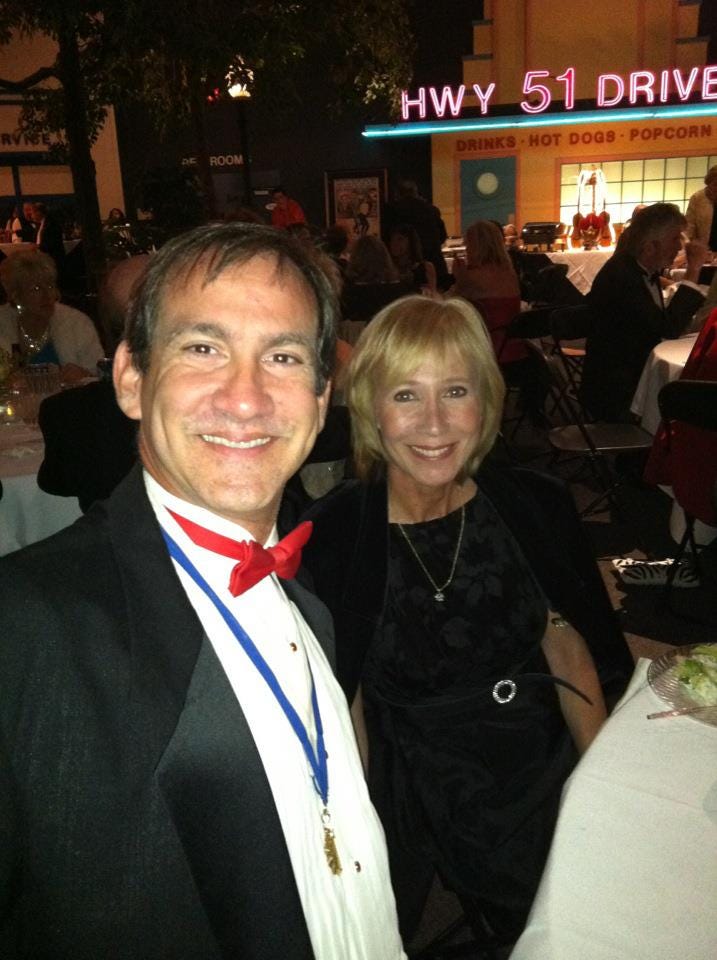
3 years to go
She always measured treatments by recovery time. How long until she bounced back? How soon until Belize, Anguilla, or simply life again? Recovery had always been fast. The downtime had been short.
This time, it seemed silly to her.
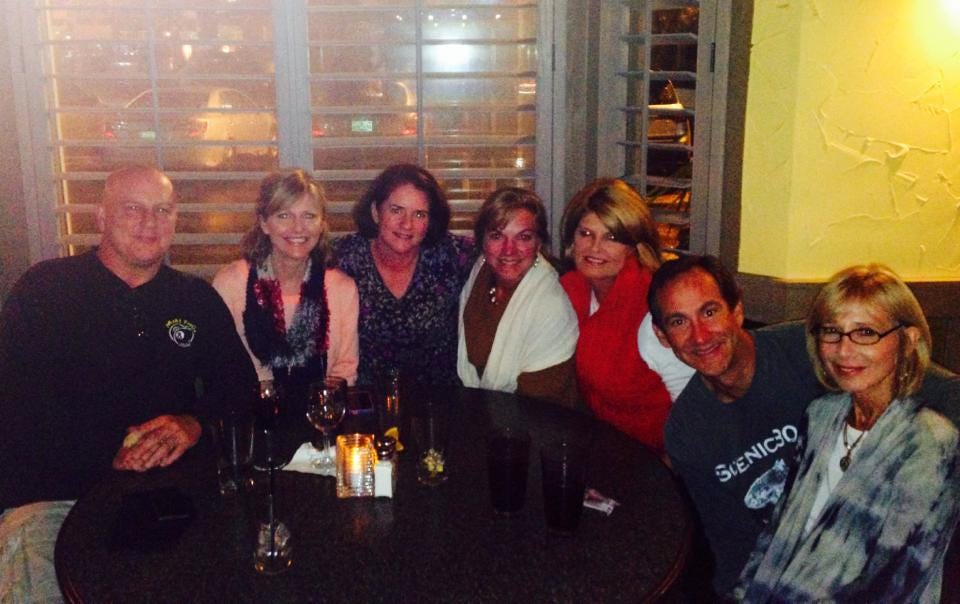
Less that One Year to go and we miss Kate now too. You would never know.
Now barely ninety-two pounds, facing open surgery in that area, recovery would likely take six weeks of basic healing—and even then, nothing might be achieved. Her body mass could slip away quickly. The doctors were clear: given the position and configuration, it might not even be operable once they opened her. A single mistake could cause death on the table.
The rational choice that day was stabilization, a hospice bed, and comfort until death.
And that was it.
Enter Kitty Lou—and a bed at Baptist Hospice in Collierville.
It took about a week. Around September 2, 2014, we checked into her first of two rooms there.
Till death do us part.
Here we go.