

There is a category of buyer I encounter regularly. They say they are are ready and I know they are smart. Most people buying a beach house are smart. Yes in different ways, but intelligent, accomplished, financially capable and they want a vacation home. But they never quite allow themselves to buy one. Why?
These are not people reaching for the unattainable. They have the means. But they also have the means to buy APPL at $300 and sell it if somethings goes wrong in the market for $270. They never think twice. They are not confused about what they can afford. In many cases, they could write a check for the property and never think about it again.
And still, in real estate there is more hesitation. I do not doubt that some of it is agency expense sure. Trading APPL barely costs a penny. Trading a home can be costly either way.
They will talk about markets. They will reference 2008. They will want a certain price for a specific kind of property and those things do not line up. I can even know the seller will not even entertain the offer. It does not matter. Maintenance, hurricanes, rental risk, opportunity cost, renovations or the idea that “real estate is goind down in price for sure and is too high right now” is always the conversations. All of those explanations seem good but are ways people often use to “I love the house” while in the back of the mind they have to find ways to get out of making the purchase. None of them are the real reason.
The real reason lives in psychology, not finance.
Daniel Kahneman explains it cleanly in Chapter 26 of Thinking, Fast and Slow, where he lays out Prospect Theory which a framework for understanding how people actually evaluate risk, loss, and value.
The short version is this human beings do not experience gains and losses symmetrically. Losses hurt more than equivalent gains feel good. And once that imbalance exists, it distorts otherwise rational decisions. They will, all else equal avoid a possible $100 loss in favor of a more likely $100 gain by doing nothing.
Vacation homes sit right in the crosshairs of this thought.
How Prospect Theory Shows Up in Real Estate Decisions
Prospect Theory tells us three things that matter here.
First, people measure outcomes relative to a reference point, not in absolute terms. everything in “economics” is relative. Second, losses have a much larger impact emotionally than gains. Third, when an outcome is considered to be a minor possible loss, people become risk‑seeking; when it is considered as a “maybe” possible as a gain, they become conservative.
Now apply that to a discretionary purchase like a vacation home.
The buyer’s reference point is not the life they could live with the home. It is their current balance sheet. How liquid are they and clean is the purchase?
Anything that moves money out of one state into another, like from liquidity to illiquidity is often considered to feel like a loss, even if it is converted into a hard asset they intend to use and enjoy creating meaningful memories or just purposely living out the remaining few years of an ill spouses beach life on purpose.
Ownership costs are therefore framed mostly as losses, not expenses for value and gain. We always here, “what is the cost to own this home” in conversations but I never here anyone ask me “you think my kids will visit more than a few times a year? or do you think our Thanksgiving can be more special here?”
Maintenance is not upkeep for most it is erosion of capital and not the preservation of a place where a special memory can be created. Property taxes are not participation in a community they are money gone, but I do kind of like the idea of transfer taxes rather than property taxes. More on that one day maybe. Insurance is not protection. it is money spent because of fear of loss.
Rental income, even when predictable, is not experienced as a gain by most, it is maybe an offset. It is uncertain so is discounted if marginal.
This is why two buyers can look at the same pro forma and have completely different reactions. One sees a balanced exchange of monetary costs for live value. The other sees a slow drain of cash that could sit more easily under the matress.
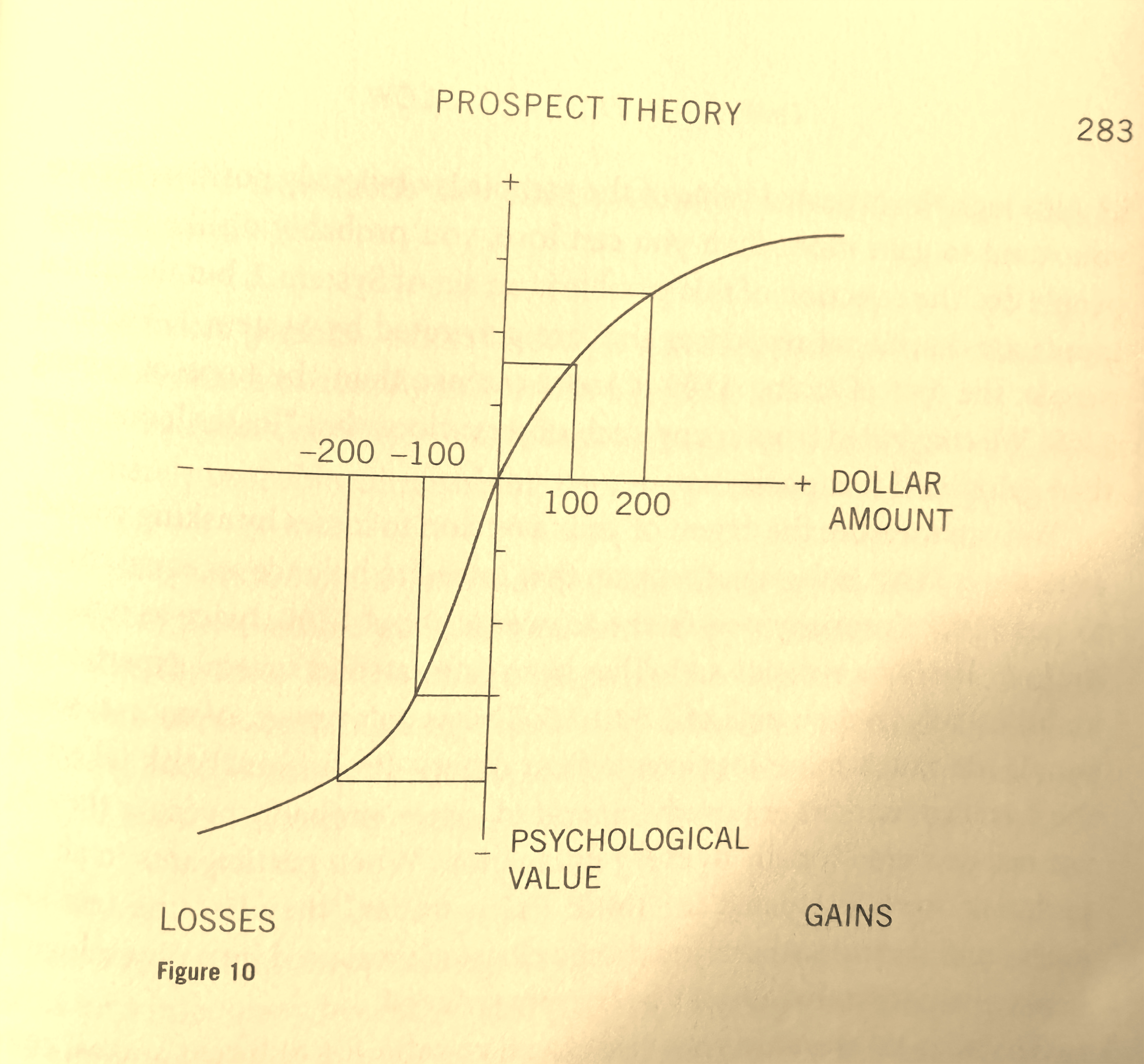
The math is the identical math. The emotional reaction to perceived gains or losses is an “economic utility” metric that we would love to think we can measure with an R Squared ruler. We cannot. We can just see it and try to isolate it in meta studies.
The Thought Experiment That Clarifies Everything
When I sense a buyer is stuck in this place, I slow the conversation down and propose a simple scenario.
I tell them. Let’s agree, for the sake of discussion, that the home we’re looking at is worth $3,000,000. We both believe that. The market data supports it. You buy it for $3,000,000 and you own it outright. No debt. No leverage. This is not about financing risk.
You use the home with your family. You also rent it occasionally but not aggressively, but simply enough to offset some of the marginal cost ownership.
Let’s say it generates $200,000 a year in short‑term rental revenue, and after all expenses you clear roughly $100,000 annually. We will ignore income taxes and depreciation entirely so it is easier to follow the thought.
You do this for ten years.
Then, seven maybe ten years from now, your life changes. The kids are grown. The beach no longer fits your life. The childhood memories created are gone now and “the cats in the cradle and the silver spoon” is what has become of your life.
We look at the market honestly in that future time, the same way we did on the way in. We agree, and at the closing table, you might walk away with $2,965,000 in cash. And you wonder? Is that possible? I will say yes. If you purchased a home in 2022 here on 30a depending on many factors it might be very possible it will only be worth $3,000,000 in 2029 or maybe even 2032 depending on all kinds of things. Timing is everything. And yet people will question me. Gayle and I have owned here collectively since 1996 and we have seen values over now 30 years with all of our eyeballs. It is 100% possible that 10 years can go by and you might have only treaded water. Even in Rosemary Beach 5 lots from walkover A.
Not $3,000,000. Not a win on paper. A modest loss is now possible. At least consider that. This goes against the internal story line and beliefs and if you have listened to the story and read along by now you feel a cringe like maybe this guy is not a good real estate professional. He should tell me all the things to make me smile. That is not my role. It is to make sure you are in the proper mindset to do this no matter the outcomes.
But then the question is nearly ready to be posited. At that moment of nearly cringe when they think I am not going to see homes with this guy and after a long pause, I ask a single question:
Will you have been happy?

Why This Question Is So Uncomfortable
For someone not trapped by Prospect Theory, the answer comes quickly.
“Of course.”
Ten years of family time and ten years of holidays, summers, long weekends, and ordinary days made extraordinary by place is the entire purpose here. I remember saying this to one couple and the wife was “Yes” and the husband was “what about this” dollar or that. I could tell they “hated” me at that moment. 11 months later they bought a lot and are building a home here and they used our team for that purpose and help. The right people get the message.
Ten years of optionality on a great life. Ten years of a life actually lived. Perhaps 5 good years with your wife before she passes away from that long illness. “I’m good with that”.
The money did its job. But for someone deeply loss‑averse, the answer is like Rush and Spirit of Radio. It “Plays that song that is so elusive”.
They start recalculating. They feel the missing $35,000. They mentally erase the rental income as if it never existed. That $1,000,000 in pretax income is vanished. They replay the decision as a financial outcome rather than a lived experience.
In that moment, something important is revealed. They are not buying a home or experience or memories. They are trying to win something in the money game.
And vacation homes are not designed for winning in the way financial instruments are. Vacation Homes are designed for use, memory, presence, and time, These are all things Prospect Theory shows us people can undervalue because they do not show up cleanly on a balance sheet. They are in an elusive song on a memory Profit and Loss Statement.
Better to buy stocks and bonds. Mediums of exchange. That is easier to value.
The reality of the story is simple. You would have put $3,000,000 to work, you would have gained $1,000,000 after expenses, and you would have walked away from closing with $35,000 lost on the initial investment. Of course present value of a dollar not considered for ease of discussion, what’s wrong with this knowing “you cannot build sandcastles on the beach with your grandbabies on a pile of bitcoin” - CB
It is a 33% absolute return on the $3,000,000 over 10 years in the income side of the sheet. Horrible by some lofty normally unachievable standard. But if they get framed in that thought, then well, we are probably done looking for homes.
The Reality Check
This is the part most real estate advisors avoid saying plainly.
If you cannot answer “yes” to that question and if a modest, fully understood, fully affordable financial loss invalidates ten years of meaningful living then you should not buy a vacation home. Not here. Probably not anywhere. There I said it. And I would rather find a person that can get to yes than spend countless days trying to Salesman someone into a purchase here over the next few years. They have to be a yes to life.
Because the problem is not the market, the price (given you walking in budget) or the property.
It is that you are measuring life decisions with a framework designed to avoid regret, not to enable joy. Prospect Theory 101.
Prospect Theory is useful for protecting capital. It is terrible at guiding discretionary life choices.
The Path Forward
The most grounded buyers I work with make a quiet shift in thinking. They stop asking, “Will this outperform?” They start asking, “What is this money for?” And then they buy the beach house.
When the answer is “to support a life we actually want to live,” the math becomes simple. I will probably have this $3,000,000 somehow someway later if I need to make the change. A zero percent return on capital for 10 years for a 100% return on joy is a good trade..
Whatever your dreams are, they must leave the realm of dreams and get cast as goals with effort taken daily to reaching the goals that ultimately fulfill the dream. At least that’s my interpretation.
The worst outcome is not losing a small amount of money. The worst outcome is realizing later that you were financially right and existentially wrong.
That question at the end will you have been happy? is not rhetorical.
It is our diagnostic tool for a person that sees the world as we do. You cannot be everything to everyone or you will be nothing to no one. There are many real estate professionals and teams all with varying degrees of styles. This is ours.
Our market is a life‑choice market. The sooner that is understand, the sooner we can be comfortable with a beach walk.